By Christina Hughes, Chief Operating Officer
At this year’s Patients as Partners EU conference, one theme consistently surfaced: patient engagement is no longer about simply collecting insight. It’s about building the process and structure to transform that insight into measurable action and outcomes at scale.
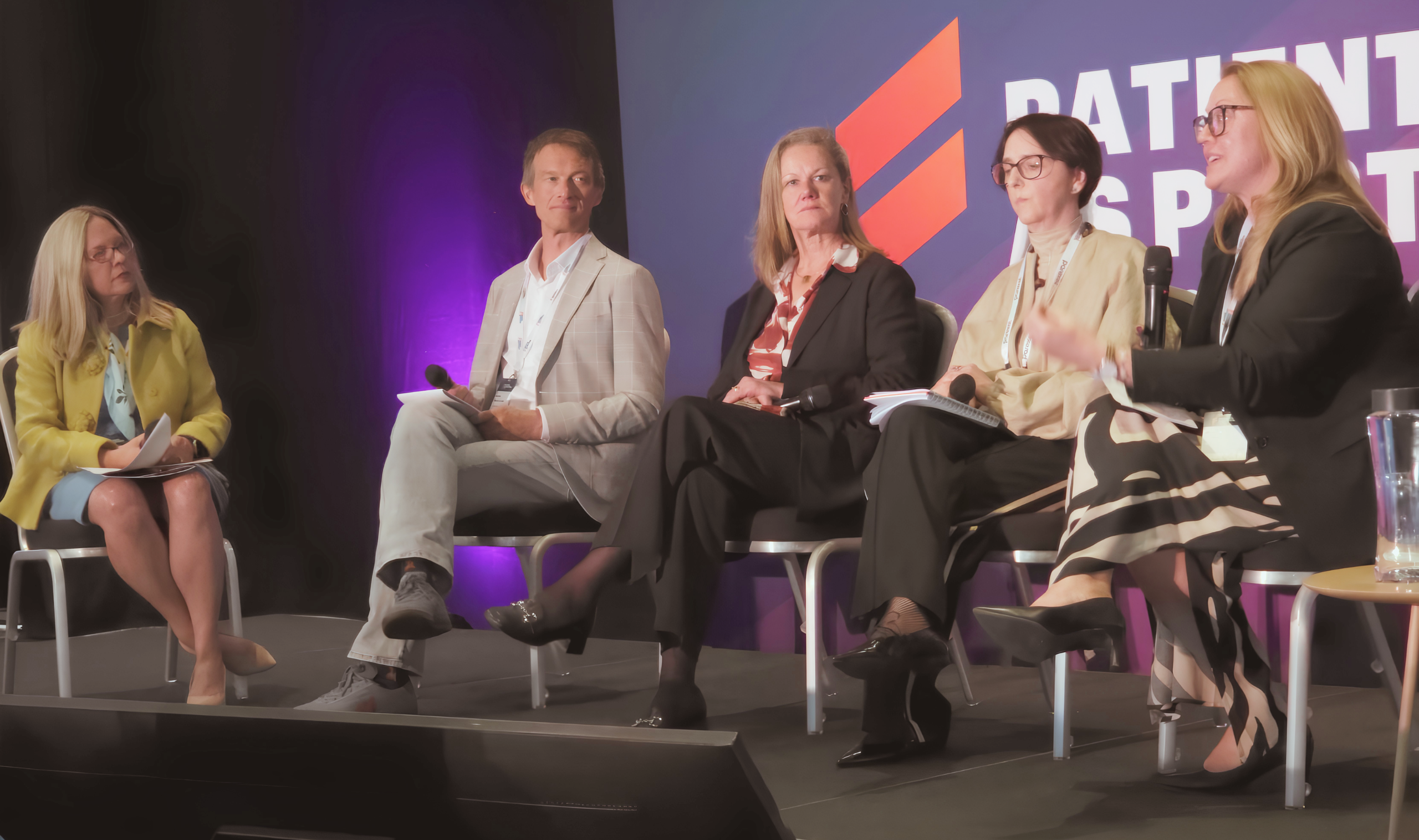
I had the privilege of moderating a panel featuring leaders from AstraZeneca, Novartis, Lundbeck, and Parexel to explore how organizations are approaching the challenge of measuring the impact of patient engagement across the medicine development life cycle.
The discussion reinforced that while the industry has made real progress integrating the patient voice into development programs, the next phase will require organizations to move beyond engagement activity alone and focus on measurable outcomes.
Patient Engagement Is Becoming More Embedded—and More Measurable
One of the clearest shifts discussed during the panel was the growing expectation that patient engagement be formally integrated into development programs rather than treated as a standalone initiative.
Anders Blædel Lassen with Lundbeck also emphasized the growing importance of following evolving regulatory guidance and publications related to patient experience data, including recent activity from the FDA as well as European and UK regulatory bodies. As regulators place greater focus on how patient insight is gathered, integrated, and applied throughout development programs, organizations will need more formalized and scalable approaches to collecting and operationalizing patient experience data.
That evolution reflects broader momentum across the industry: patient insight is becoming an increasingly important input into clinical, operational, regulatory, and strategic decision-making.
Engagement Has the Greatest Impact When It Shapes Decisions Early
Another important takeaway from the discussion was that patient engagement creates the most value when it happens early enough to influence decisions, not simply validate them after the fact.
Tanwen Evans with Parexel shared compelling examples of how patient feedback directly improved clinical trial experiences and reduced unnecessary burden for participants. These included protocol modifications that reduced invasive procedures and adjustments that made participation more tolerable and practical for patients.
The conversation highlighted an important distinction: meaningful patient engagement requires organizations not only to gather insight but also to respond to it in ways that demonstrably improve patient experience and operational outcomes.
The Industry Is Beginning to Quantify ROI
One of the most valuable parts of the discussion focused on how organizations are beginning to measure the return on investment of patient engagement in more concrete ways.
Barbara Valastro with AstraZeneca discussed AstraZeneca’s efforts to develop frameworks using leading and lagging indicators to better understand patient experience, retention risks, and site-level gaps in real time. One example included implementation of study participant feedback questionnaires that generated significant engagement and actionable data during trials.
And Michaela Dinboeck with Novartis described how Novartis is increasingly focused on measuring impact and outcomes, including reducing placebo arms, shortening timelines, and accelerating development decisions.
An especially important point raised during the panel was that ROI should not be framed only in business terms. Patients also need to see how their input contributed to real changes in the development process and overall experience.
AI May Help Scale Patient Insight Across Organizations
The panel also explored the role AI may play in helping organizations operationalize patient engagement more effectively.
Dinboeck shared examples of how Novartis is using AI-enabled platforms to organize and synthesize thousands of patient engagement documents, helping teams identify patterns, uncover gaps, and better understand where additional patient insight may be needed.
The discussion reinforced that the opportunity with AI is not simply generating more information, but enabling organizations to better connect, analyze, and apply the insight they already have across programs and teams.
Scaling Engagement Remains the Industry’s Biggest Challenge
While panelists shared encouraging examples of progress, the conversation also made clear that scalability remains one of the industry’s biggest hurdles.
Organizations are generating valuable patient insight, but many still struggle to apply it consistently across therapeutic areas, clinical programs, and functions. Panelists repeatedly emphasized the need for more structured systems, stronger internal alignment, and greater consistency in how engagement is operationalized and measured.
That challenge closely aligns with how Reverba Global approaches engagement through its Patient Experience Engine—an enterprise operating system designed to connect insight, engagement, and action across the medicine development life cycle through an integrated and compliant technology platform.
If there was one overarching takeaway from the panel, it was this: the future of patient engagement will depend on organizations’ ability to consistently transform patient insight into measurable action—not just in isolated programs, but across the entire development life cycle at scale.
The discussion reinforced that while the industry has made meaningful progress integrating the patient voice into development programs, the next phase will require organizations to move beyond engagement activity alone and focus on measurable outcomes.
Connect with us to find out how we can help build a strong, scalable patient engagement infrastructure: connect@reverba.com.