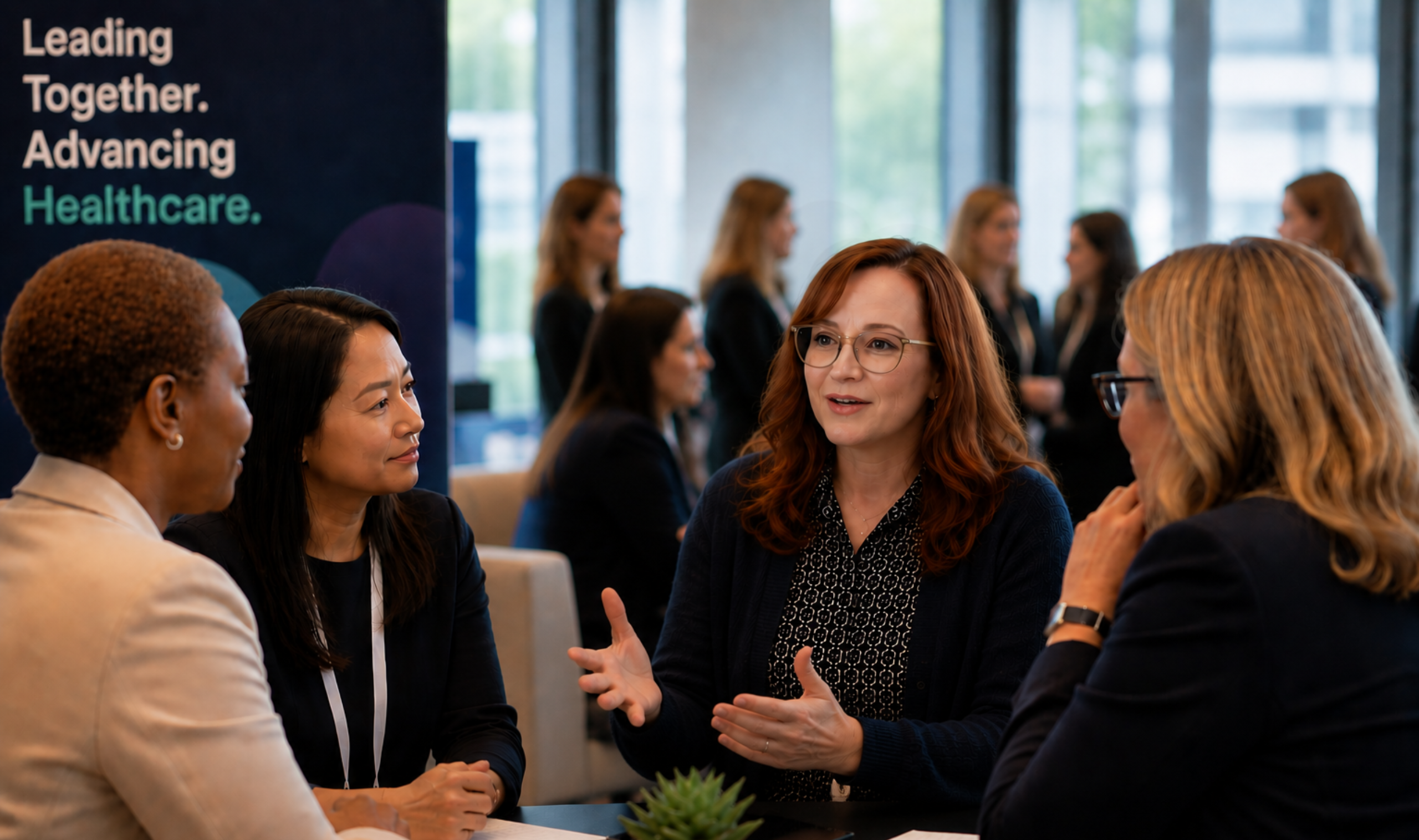
By Cheryl Lubbert, Reverba Global CEO. Recently at the Healthcare Businesswomen’s Association Global Ascension Leadership Experience (GALE), I had the privilege of raising a glass alongside an extraordinary group of leaders celebrating this year’s Luminaries, Rising Stars, and the broader community that continues to shape the future of healthcare.
At this year’s events, one theme came through with clarity: while healthcare is advancing at unprecedented speed, the factors that will ultimately define its success remain deeply human.
This idea was at the heart of my remarks at the evening reception: Progress doesn’t happen in isolation, but through leadership, mentorship, and the willingness to help others grow.
Mentorship Is Not a Nice-to-Have. It’s Foundational
One of the most meaningful parts of my journey with the Healthcare Businesswomen’s Association has been the opportunity to serve as a mentor and contribute to advisory boards over the years.
As the industry continues to evolve, mentorship must be viewed as more than a professional courtesy. It is a critical system for developing leadership, transferring knowledge, and ensuring continuity in how healthcare advances.
Organizations like the Healthcare Businesswomen’s Association have long understood this, creating structured opportunities for connection, sponsorship, and growth that extend beyond individual organizations.
Community as a Catalyst for Progress
Innovation often receives the spotlight, but community is what sustains momentum.
Across the GALE events, the value of community was evident, not just in formal programming, but in the quality of dialogue and exchanges around the sessions. These environments supported honest conversations, cross-functional perspectives, and the kind of collaboration that accelerates progress.
Technology Is Accelerating, but Trust Is Still Built Person to Person
There is no question that healthcare is entering a new era of acceleration.
Science is advancing at an incredible pace. Patients are more informed and engaged than ever before. And technology, from AI to data platforms, is fundamentally reshaping how we discover, develop, and deliver care.
But the defining factor will not be the technology itself. It will be how effectively it is translated into meaningful, trusted experiences.
Trust is built in how we communicate.
In how we listen.
In how we translate complexity into clarity.
In how we connect innovation to real human experiences.
The Human Touch Is Not Being Replaced, It’s Being Redefined
There’s a narrative emerging that technology will replace many of the traditional touchpoints in healthcare.
I don’t believe that. I believe it will redefine them. The most successful organizations will not treat technology and human connection as competing priorities. They will design for both.
Scaling engagement is essential. But so is ensuring that engagement remains grounded in empathy, context, and lived experience. The future of healthcare will be shaped by those who can integrate data-driven precision with human-centered understanding.
Looking Ahead
The leaders recognized at this year’s GALE events reflect what the industry needs more of—individuals who are advancing innovation while also strengthening the systems that support people.
As healthcare continues to evolve, mentorship, community, and human connection will not become less important. They will become more so.
Because in the end, the most meaningful progress will not be defined solely by what is built, but by how it is experienced.